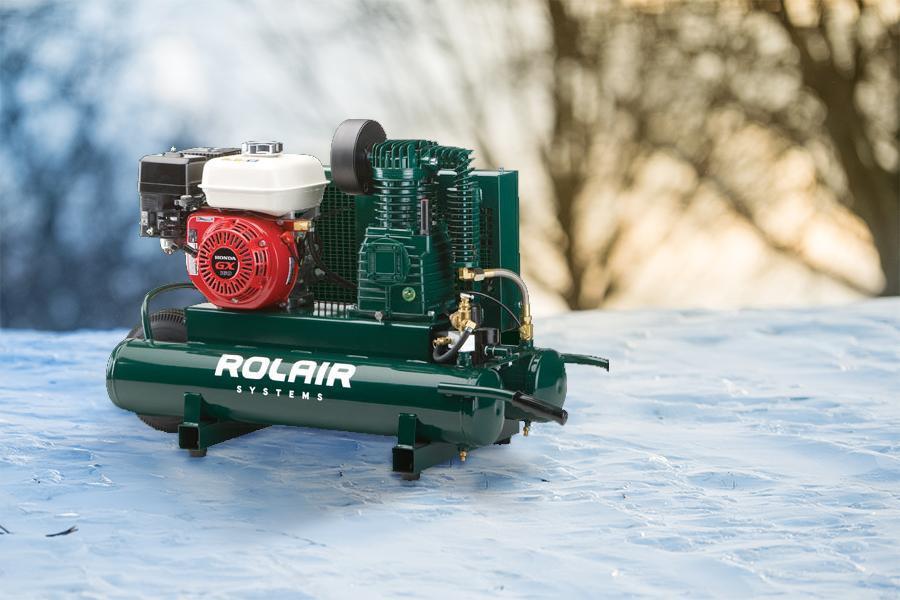
Quebec winters can sometimes be hard on your tools and machinery. This is true for air compressors that are weakened by the cold, snow and wind. Be sure to take good care of your compressor so that it will continue to work for a long time.
Electric maintenance compressor
Here are a few tips to keep your electric compressor in tip-top shape all year long.
- Use a heavy gauge extension cord to avoid overloading.
- It is best to plug the compressor directly into a wall outlet and, if necessary, use a longer air hose between the compressor and the air tool.
- Good outlet moisture management is important for high gallon compressors, especially if they are used for painting.
We supply filter systems (e.g., 51.355) of all kinds, according to your needs.
Gas compressor maintenance
Here are some excellent tips to keep your gas compressor in good condition and running all year round.
- Use super ethanol-free gasoline with the highest possible octane rating.
- Regularly change the engine and pump oil.
- For the pump, it's best to use synthetic oil (11.1200), especially in winter, as its consistency will be more liquid.
- Use motor oil suited to the season. For winter, try 5w-30 oil.
- Ensure that the dials and regulator are functional and in good condition so as not to exceed the recommended PSI on the tools.
- Use silica air dryers (ATD-1/4) during the winter on job site compressors to manage moisture. When moisture gets into the tools, it freezes and can cause operating issues.
- Make sure that the legs under the compressor are in good condition so that the compressor stays straight and the oil indicator is level. This will prevent the compressor from seizing or the oil detector from being triggered.
A few tips for compressors of all types
Here's how to ensure the longevity and year-round operation of any type of compressor.
- After each use, empty the compressor by the valve located under the tank, not through the safety valve. If your valve is difficult to operate, you can replace it with a product such as (132BV). You'll avoid an operating problem caused by condensation in the hoses or rust in the tank and in the parts.
- Ideally, you should avoid pouring antifreeze in the tanks, as it can damage O-rings or cause hoses to swell.
- Use an inverted hose valve (VALVE1/4OPB) to drain hoses. This will create a blower effect and effectively drain your hose.
If your compressor (no matter the type) isn't working properly or if you have any questions about it, please don't hesitate to contact us. Our experts can share their advice and recommend the best products to suit your needs.